Die Anatomische Sammlung der Haustiere entdecken
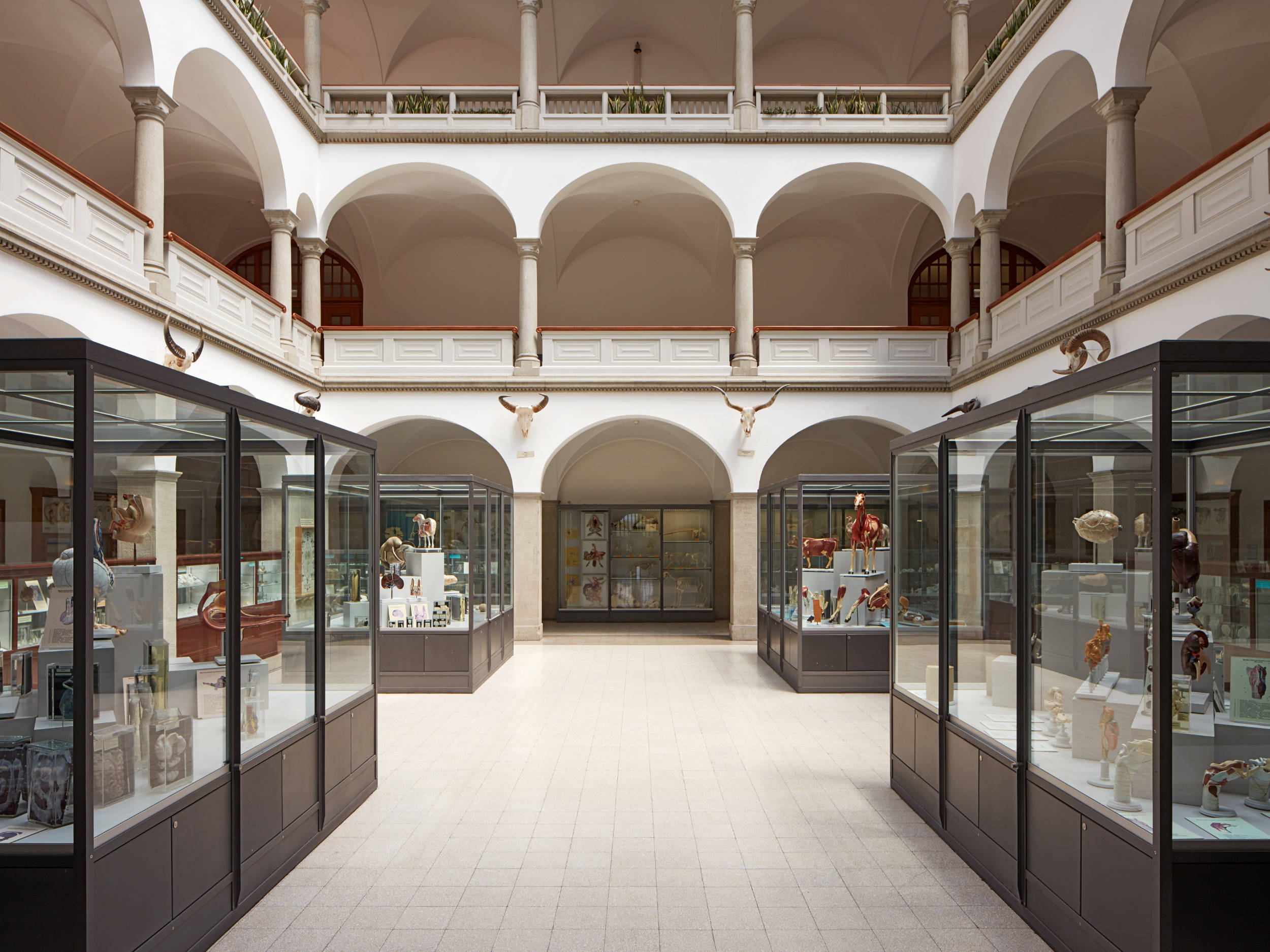
How do we gain knowledge about the bodies of animals? On this guided tour, you will discover ETH Zurich’s Anatomical Collection of Domestic Animals, which has been used for teaching and research for more than 150 years. It contains an extraordinary collection of skeletons, preserved specimens, and both historical and modern models.
Using selected exhibits, you will learn how students and researchers study and compare the anatomy of different animal species. Discover how various preparation techniques and models help make the structure of the body visible and generate scientific knowledge. You will also find out how the collection continues to evolve and how digital technologies are shaping the future of teaching.
Finally, you will have the opportunity to get hands-on. In a short workshop, you will explore a physical and a digital cow model, as well as a full-body skeleton. By touching, observing, comparing and analysing together, you will experience how knowledge is not only taught, but also discovered collaboratively.
- This event has passed.
Die Anatomische Sammlung der Haustiere entdecken
August 29 @ 12:00 - 12:50
How do we gain knowledge about the bodies of animals? On this guided tour, you will discover ETH Zurich’s Anatomical Collection of Domestic Animals, which has been used for teaching and research for more than 150 years. It contains an extraordinary collection of skeletons, preserved specimens, and both historical and modern models.
Using selected exhibits, you will learn how students and researchers study and compare the anatomy of different animal species. Discover how various preparation techniques and models help make the structure of the body visible and generate scientific knowledge. You will also find out how the collection continues to evolve and how digital technologies are shaping the future of teaching.
Finally, you will have the opportunity to get hands-on. In a short workshop, you will explore a physical and a digital cow model, as well as a full-body skeleton. By touching, observing, comparing and analysing together, you will experience how knowledge is not only taught, but also discovered collaboratively.