When the mountains rumble and roar
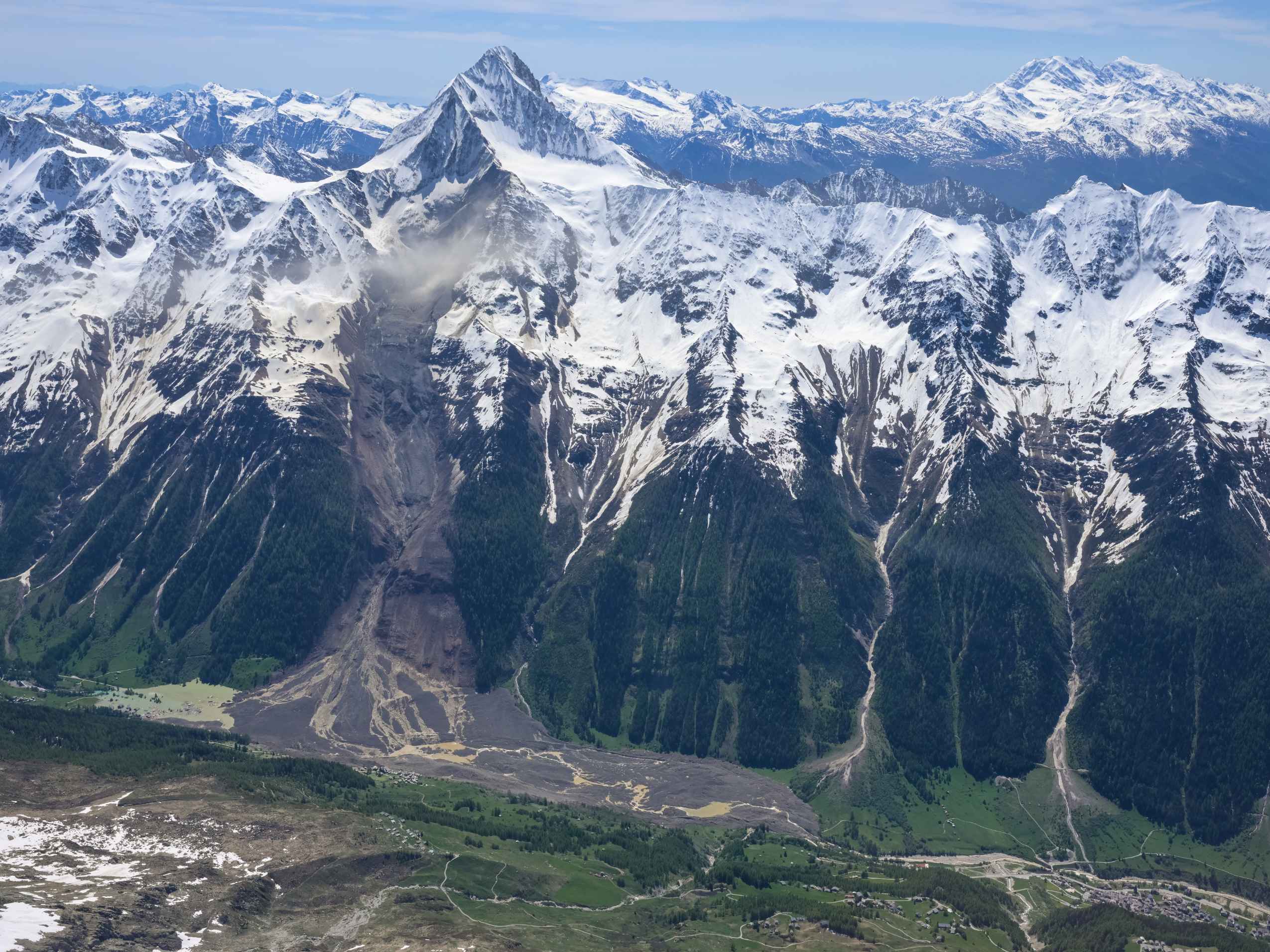
How do rockfalls and debris avalanches occur? Through simulations and experiments, discover how researchers investigate natural hazards in the mountains and work to better understand and assess their risks.
The Blatten rockslide in May 2025 dramatically demonstrated the immense forces at work in the Alps. Millions of cubic metres of debris, ice and water rushed into the valley, transforming the landscape within moments. But how do such catastrophic events occur? And how can researchers better understand and predict their risks?
At our booth, discover how scientists investigate rockslides, debris avalanches and other mass movements. Using computer graphics and simulations, we show how these events can be analysed and modelled. We also explore how the movement of debris, rock and ice can be described mathematically.
Through simple experiments, you can observe how gravel and other granular materials behave. Discover how friction and internal forces develop within a moving mass of debris and why these processes are crucial for understanding natural hazards.
Join us and learn how research helps improve risk assessment in mountain regions and supports the development of future early-warning systems.
Other events surrounding rockslides at Scientifica:
Workshop: When mountains start to move
Saturday, 29. August 2026, 12.30; 13.30; 14.30; 15.30; 16.30
Sunday, 30. August 2026, 12.30; 13.30; 14.30; 15.30; 16.30