When does a forest become a CO₂ sink?
Forests are important allies in the fight against climate change because they absorb CO₂ from the atmosphere. But a newly planted forest is initially a source of CO₂. When does a young forest become a CO₂ sink? On the Hönggerberg, we measure this with a new flux tower – breath by breath.
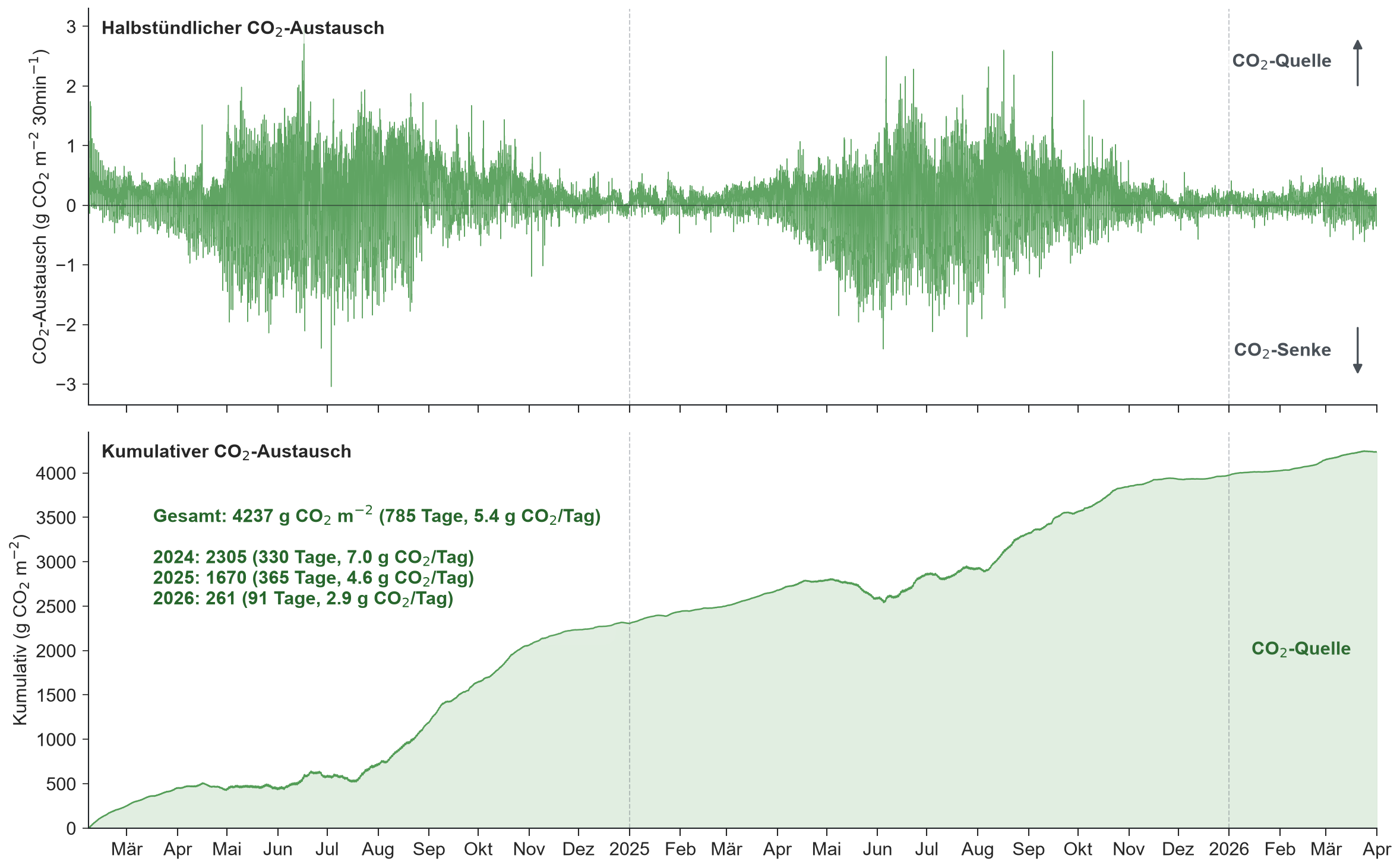
Trees absorb CO₂, which is why newly planted forests are often seen as an important tool in the fight against climate change. But a young forest is not a CO₂ sink straight away. At first, it is a source of CO₂: the soil releases more CO₂ into the atmosphere than the young trees can absorb through photosynthesis. So when does the balance shift?
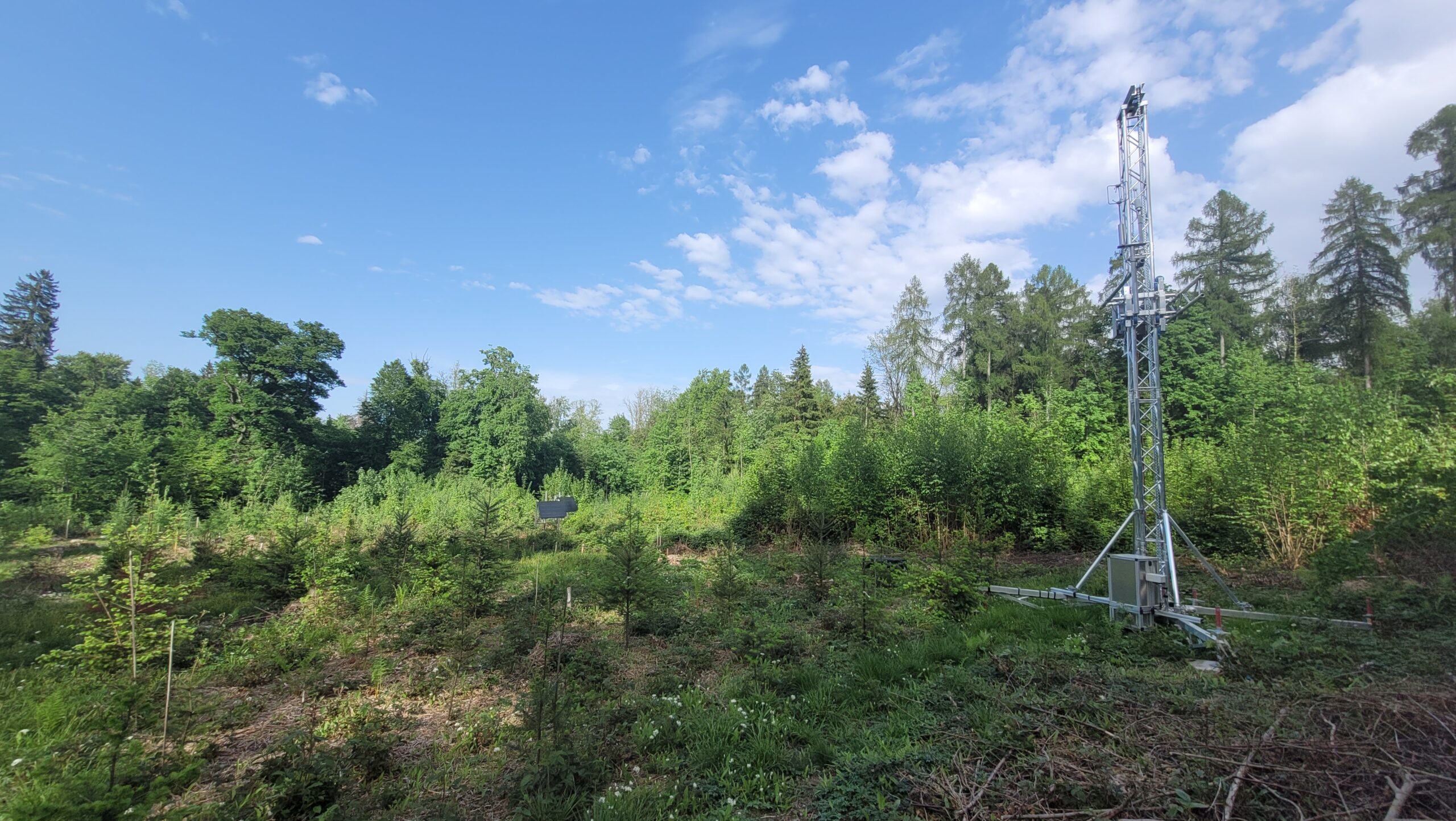
To answer this question, researchers installed a new flux tower in 2024 at the Zurich Forest Lab on the Hönggerberg. Using the eddy covariance method, it continuously measures how much CO₂ and water the young experimental forest exchanges with the atmosphere.
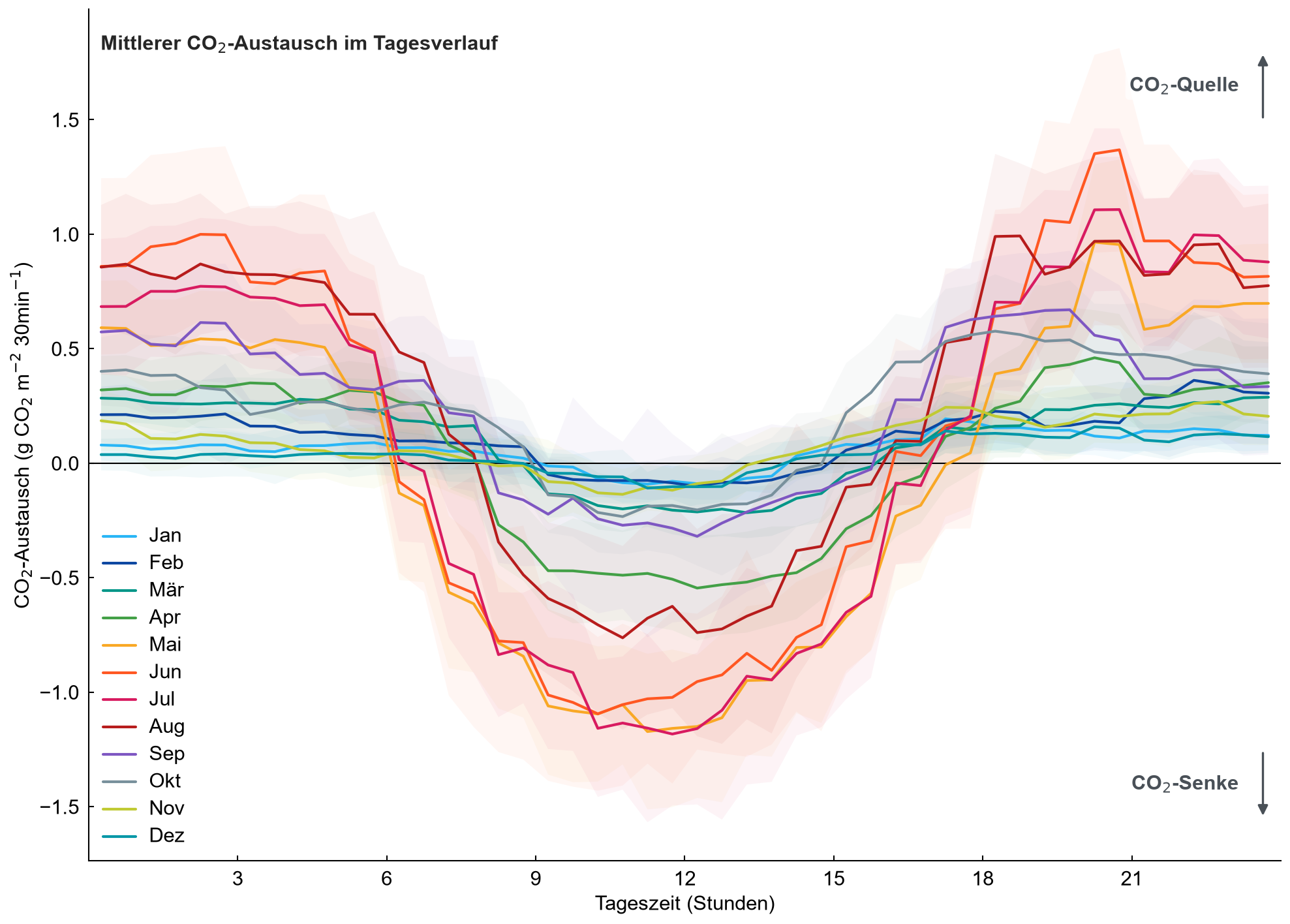
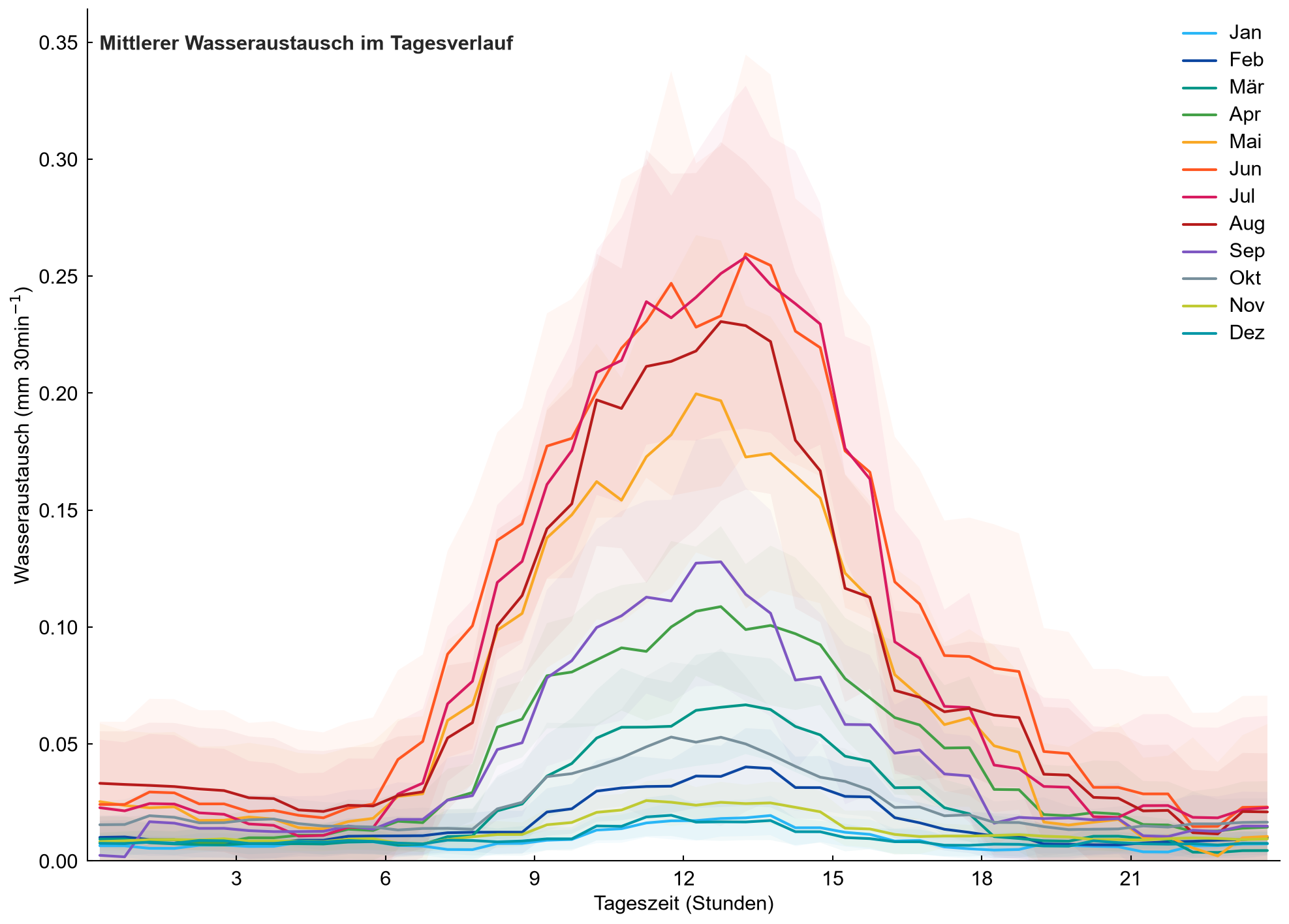
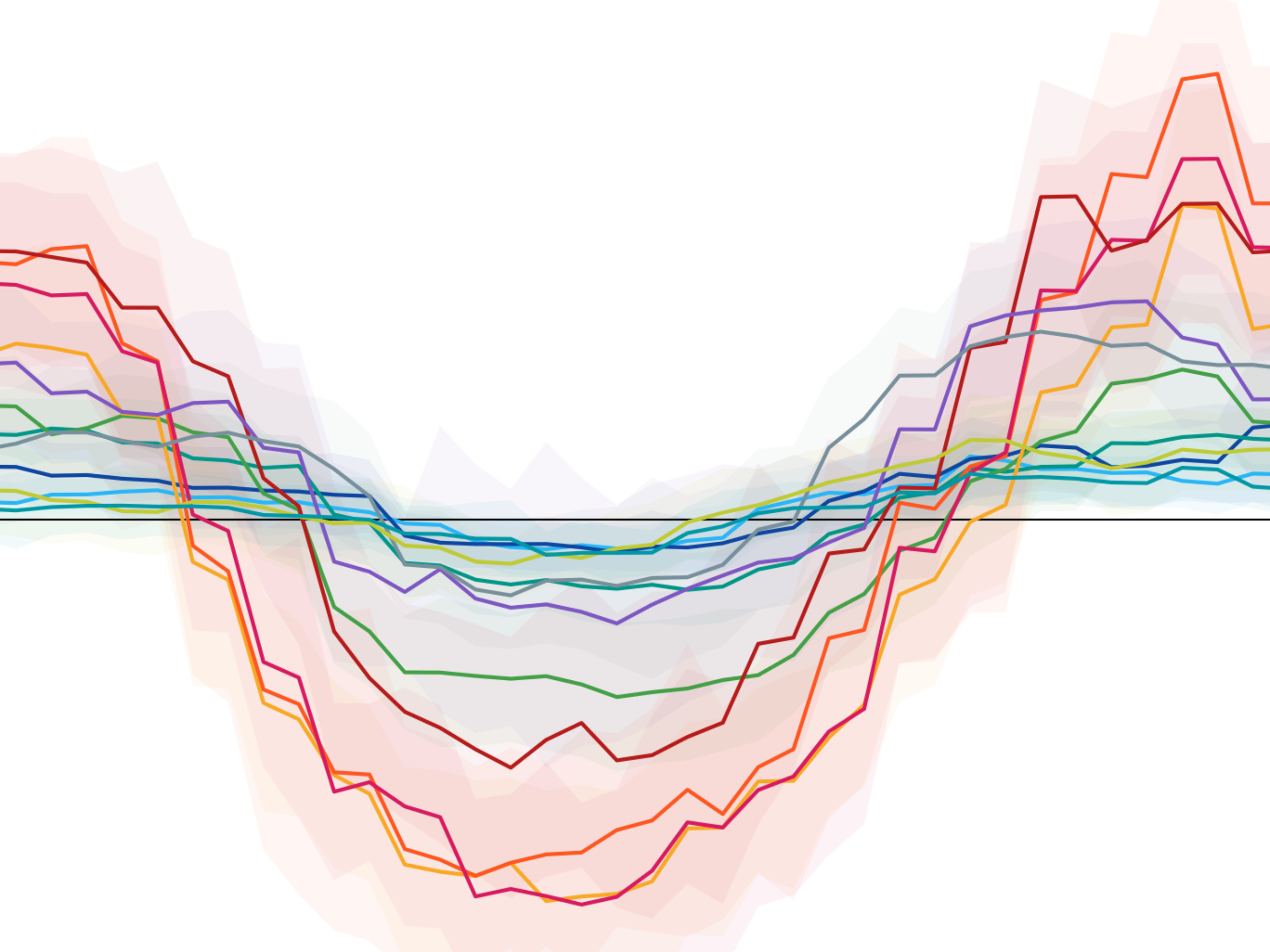
These measurements make the forest’s invisible “breathing” visible. Plants and soil constantly release CO₂, but during the day photosynthesis usually allows the forest to absorb more CO₂ than it releases. At night, only respiration remains, resulting in a net release of CO₂. At the same time, trees lose water through their leaves. In summer, evaporation is many times higher than in winter. When conditions become too hot and dry, trees reduce water loss – but this also limits their ability to absorb CO₂.
At our booth, discover what the first years of measurements reveal. The young forest is still a source of CO₂, but it releases less carbon every year and is well on its way to becoming a CO₂ sink. Exactly when this turning point will be reached is something the measurements of the coming years will reveal. A working eddy covariance tower at the booth demonstrates how these measurements are made, and you can follow its data live in real time.
Further information:
Other events relating to forests at Scientifica:
Sunday, 23. August 2026, Hönggerberg
Booth: Trees of the future – Which species will thrive in a changing climate?
Sunday, 23. August 2026, Hönggerberg
Sunday, 23. August 2026, Hönggerberg
Booth: Virtual forests – A journey into the forests of the future
Sunday, 23. August 2026, Hönggerberg
Booth: How are our forests faring in the face of climate change?
Sunday, 23. August 2026, Hönggerberg
Guided tour: Following the water cycle through the forest
Sunday, 23. August 2026, 15.00
Guided tour: Trees of the future – species suitability under climate change