Tracking chemicals in the environment
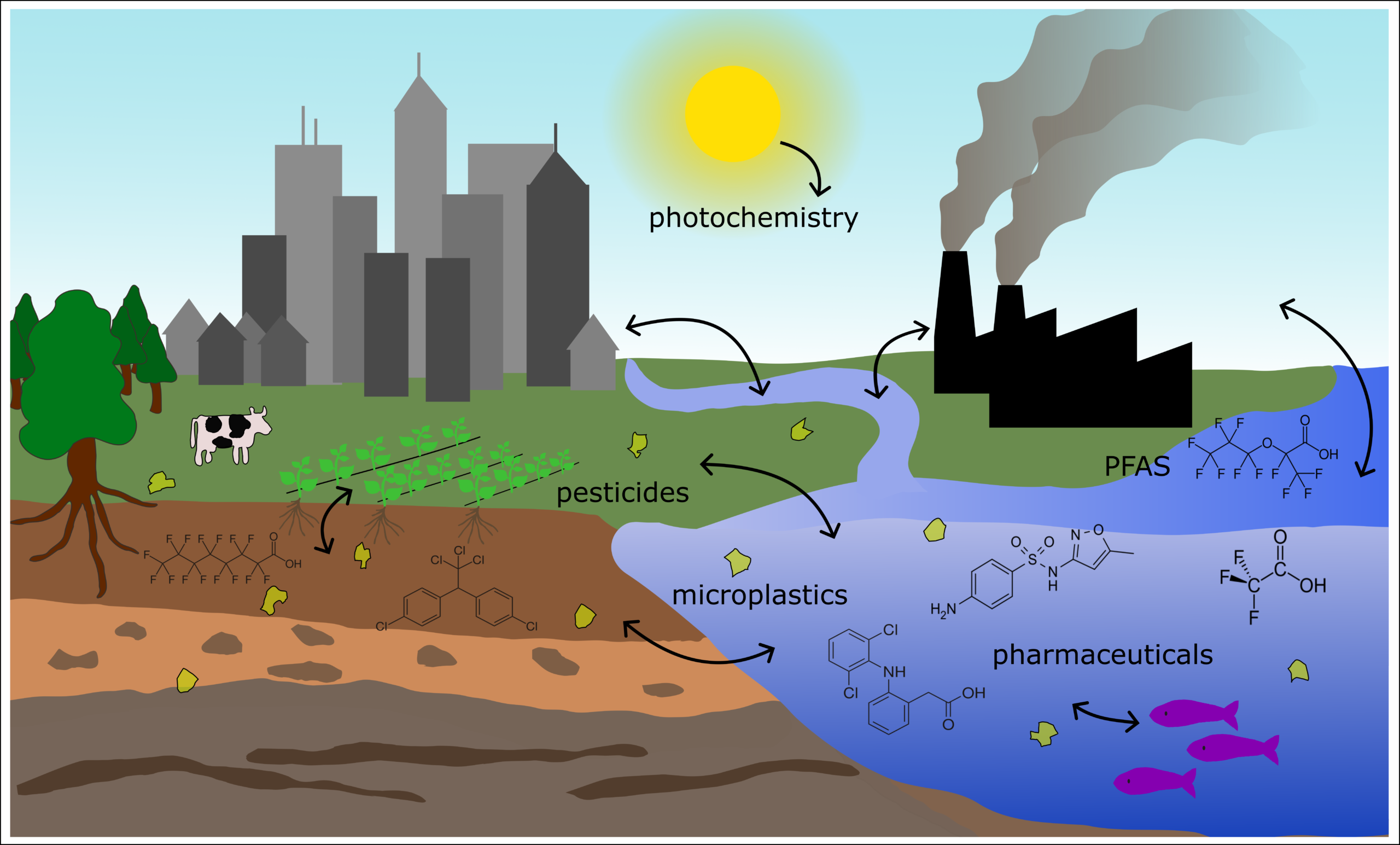
Explore three areas of environmental organic chemistry: photochemistry, microplastics, and PFAS. Discover how scientists investigate the fate of chemicals in the environment and learn more about where chemicals are found, how they are transformed and why many chemicals pose a risk for ecosystems and human health.
Chemicals are everywhere in our environment. Some break down naturally, while others persist over centuries. But how are chemicals and their environmental impact investigated by scientists?
How light transforms chemicals: Discover photochemistry, a natural process that helps break down compounds in the environment. Create your own light-sensitive paper using raspberry juice and use a laser pointer to draw on it. Watch the effect of light on colours and learn how researchers study chemical transformations in nature.
The search for hidden microplastics: Microplastics are found almost everywhere, yet they are often invisible to the naked eye. Take part in an interactive game inspired by the classic Battleships challenge and search for hidden microplastic hotspots in a mock soil sample. Learn how environmental scientists detect microplastics and investigate where they accumulate in the environment.
Tracking “forever chemicals”: PFAS are a class of highly persistent chemicals often called “forever chemicals”. Explore an interactive map showing PFAS contamination across Europe and find out why these substances have become a major environmental and health concern. Learn how researchers contribute to understanding and reducing PFAS pollution.
Join us to discover how environmental scientists investigate the chemicals around us, and why this knowledge matters for the future of our environment and our health.