Wild Science
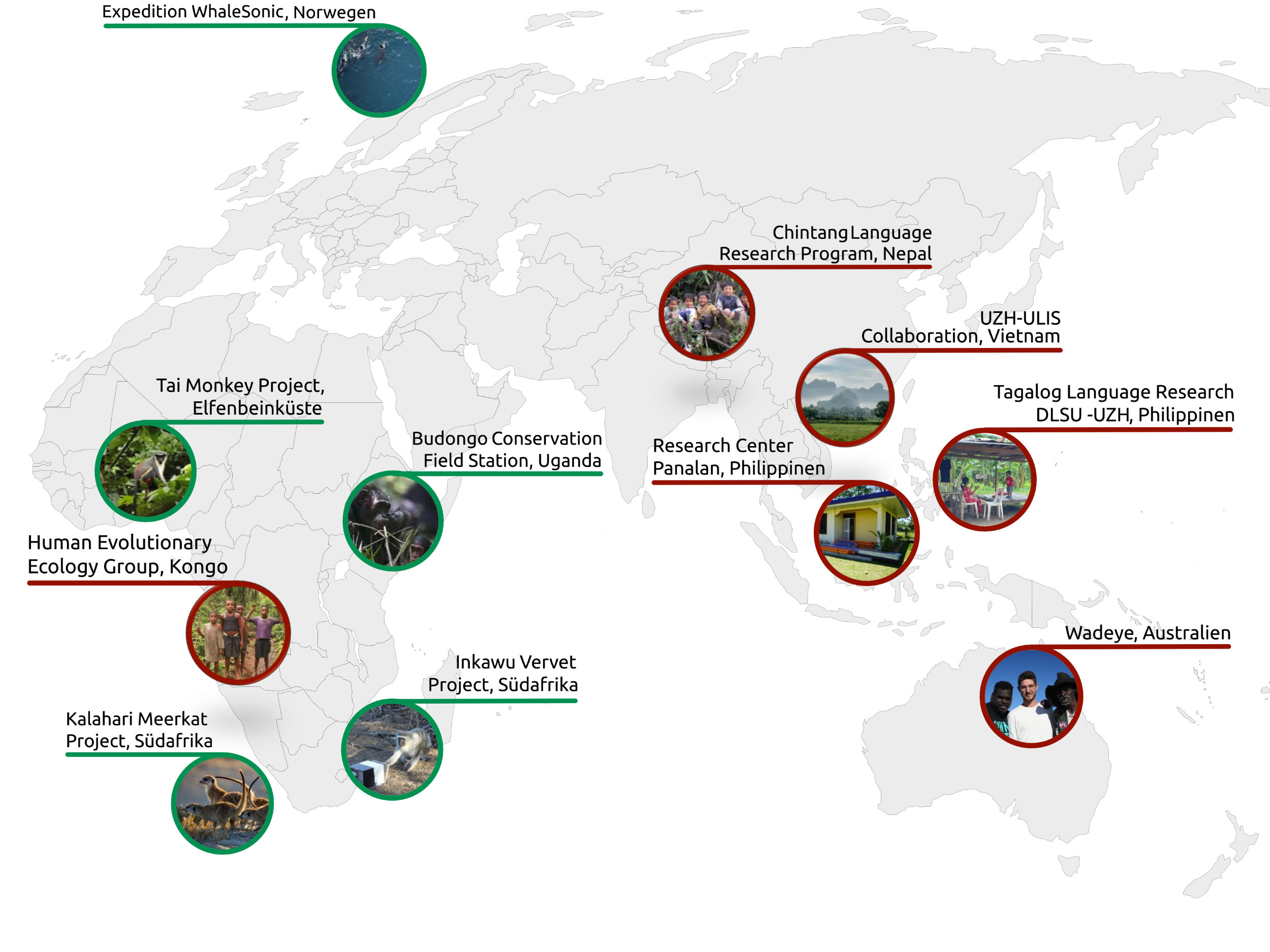
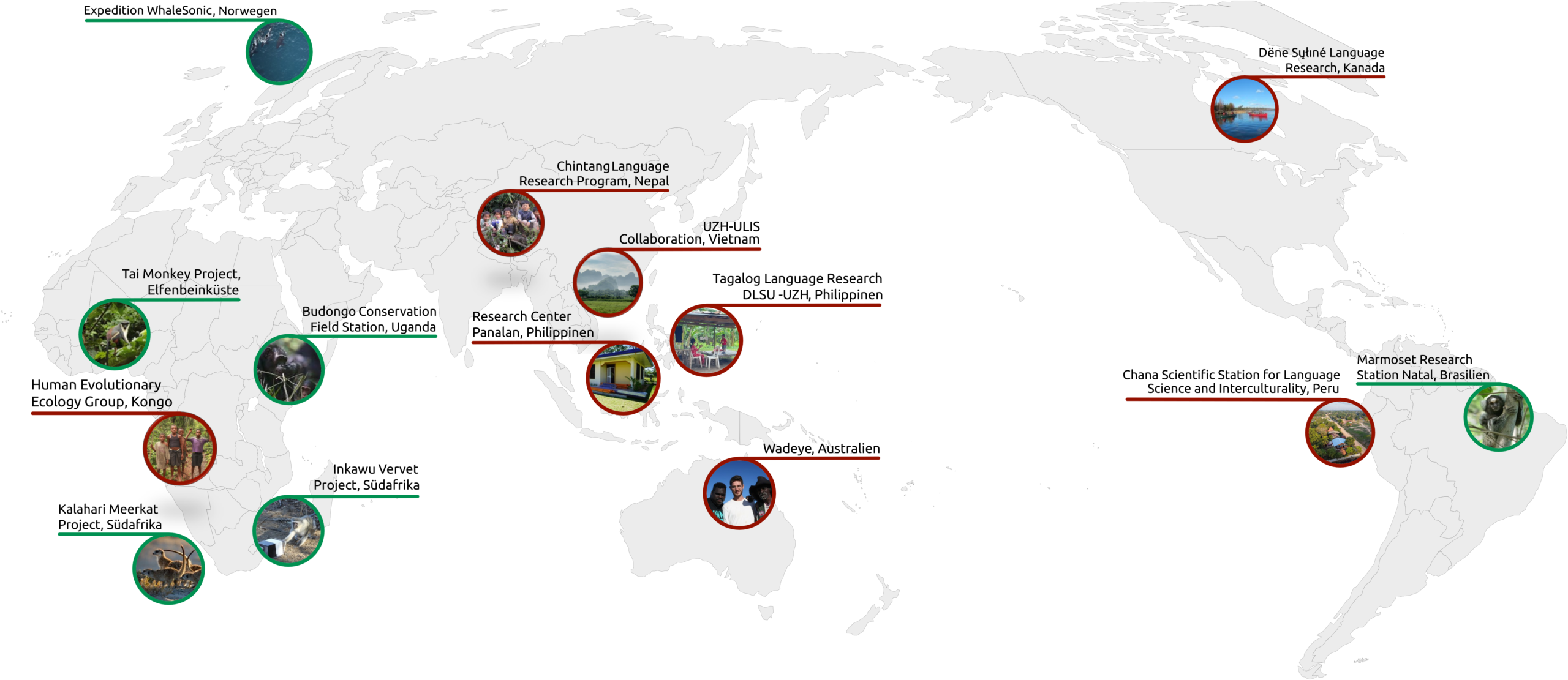
To explore the origins of language, researchers from the NCCR Evolving Language travel around the world and study animal communication in their natural habitats. Through observations and recordings, they aim to understand how our own language has evolved.
How do researchers study animal communication in the wild? Scientists at the NCCR Evolving Language work in a variety of habitats. There, they observe, record and document animal communication to better understand how animals communicate with one another.
Studying animal communication systems is important so that they can be compared to human language. Animals also use calls, gestures, and other signals to exchange information. By discovering similarities and differences, we gain valuable insights into what makes human language unique and how it might have evolved.
The NCCR Evolving Language invites you to immerse yourself in the world of field research in forests and oceans. Researchers often spend months in isolated regions far from civilization. They share stories from their adventurous journeys and provide insights on their work – from long observation periods to audio recordings to tracking individual animals.
At Scientifica, you’ll be able to listen to real recordings and explore how researchers analyze and evaluate sounds and behavior. You’ll learn how research is conducted in the wild, and you’ll have the chance to try your hand at identifying animals.