Animal anatomy: visible, comprehensible, contemporary
Führung in Englisch
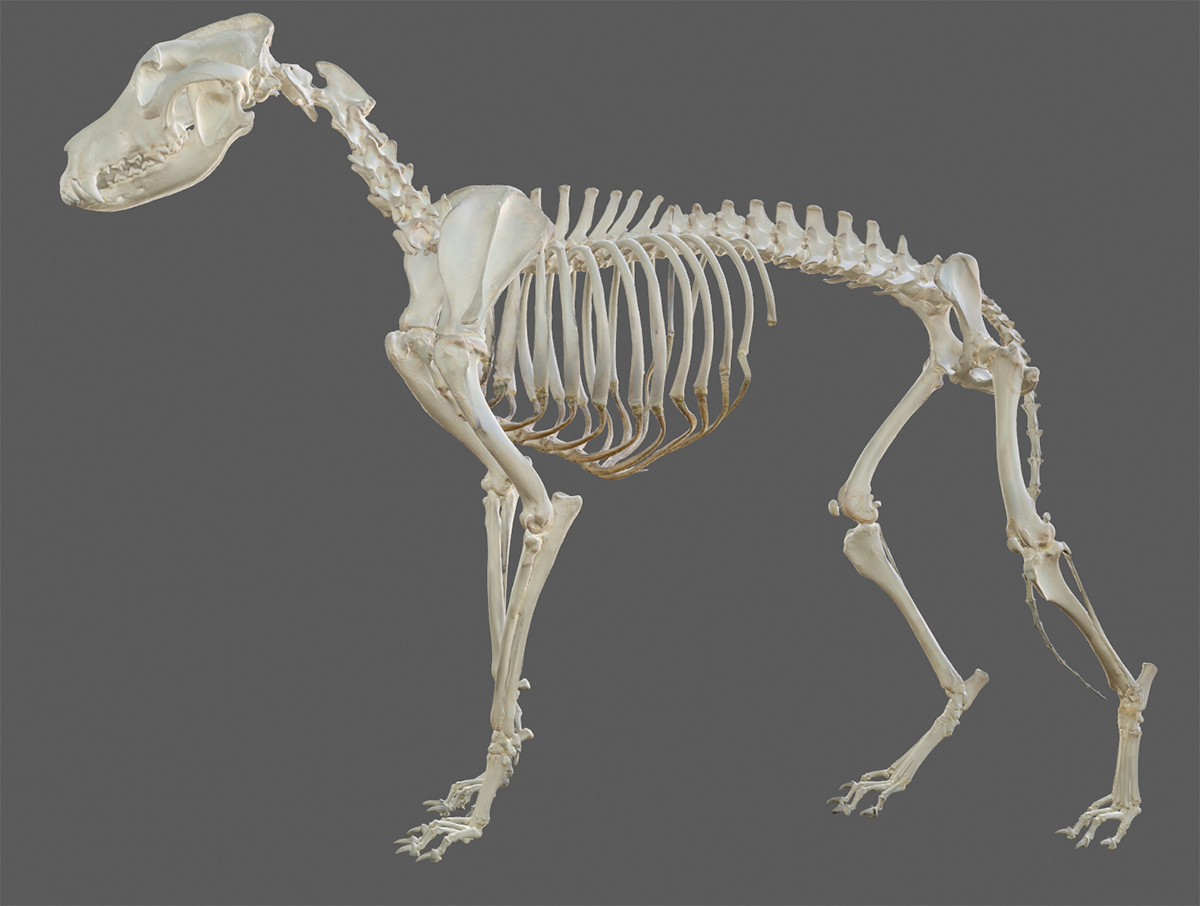
Anatomy visibly and tangibly reveals the structural diversity of human and animal bodies as a result of evolution. As a prerequisite for understanding normal and pathological bodily processes, anatomy is a foundation of medicine. In animal anatomy, plastination (known from the ‘Body Worlds’ exhibitions) is used to make anatomical structures vivid and comprehensible. In this process, natural body (parts) are prepared and made permanently durable by impregnation with a synthetic plastic. In addition, anatomical specimens are scanned with a high-resolution 3D scanner and reproduced in 3D printing. In the computer, these scans can be used as freely rotating images for teaching and research. At the microscopic level, histological specimens are scanned and can be studied on the computer even at high magnification. This allows students to perform microscopy on their own computers. These new techniques also allow students to study three-dimensional anatomical structures on durable, high-quality specimens, as well as on the computer.