Bright and durable: structural colours
Peacock feathers shine in all colours and almost never fade. This special property is due to microscopic structures. We call this structural colour. Can this phenomenon of nature also be applied in industry? Find out how the colours are created and what’s their potential.
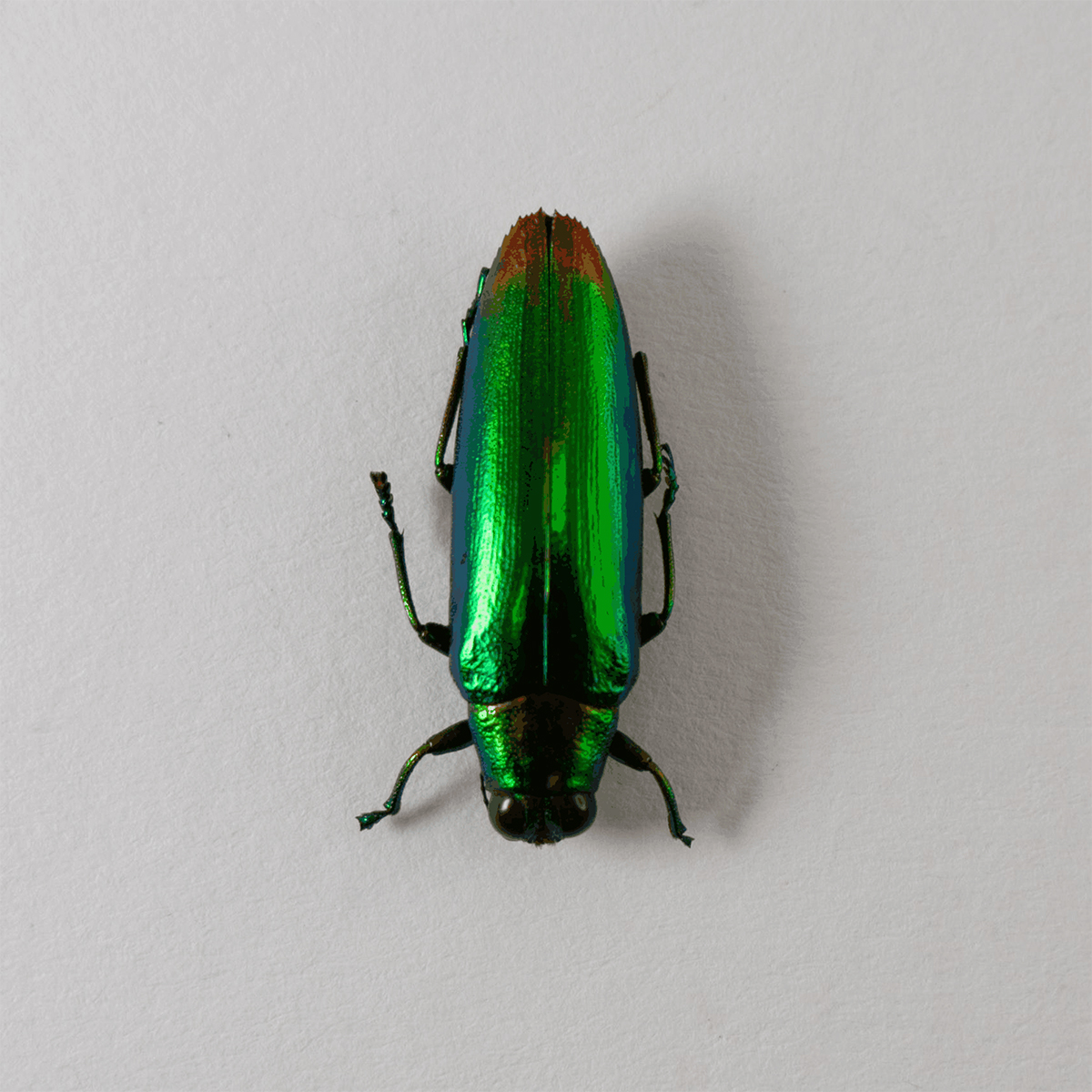
In everyday life, we mostly see colours in the form of pigments: the white in wallpaper, the blue in ink or the countless colours in our clothes. We also see a lot of pigment colour in nature, for example in tree bark or blades of grass. However, there are also other kinds of colours in nature that stand out because of their strong saturation and shimmering effects. You often see these colours in the feathers of birds, on the backs of beetles or in water bubbles in a pond. These colours do not (or not only) come from pigment, but from microscopic structures.
These structures influence the light to create the colour and allow for the shimmer we see in butterfly wings or in shells and pearls. Unlike our old T-shirts and photos, these so-called structural colours cannot fade, but retain their colour for hundreds of years. This property in particular, but also the fact that they are non-toxic depending on the material used, is interesting for industrial applications. We could make objects that keep their colour all their life – our hammock would still have the same beautiful yellow in 20 years as it does today.
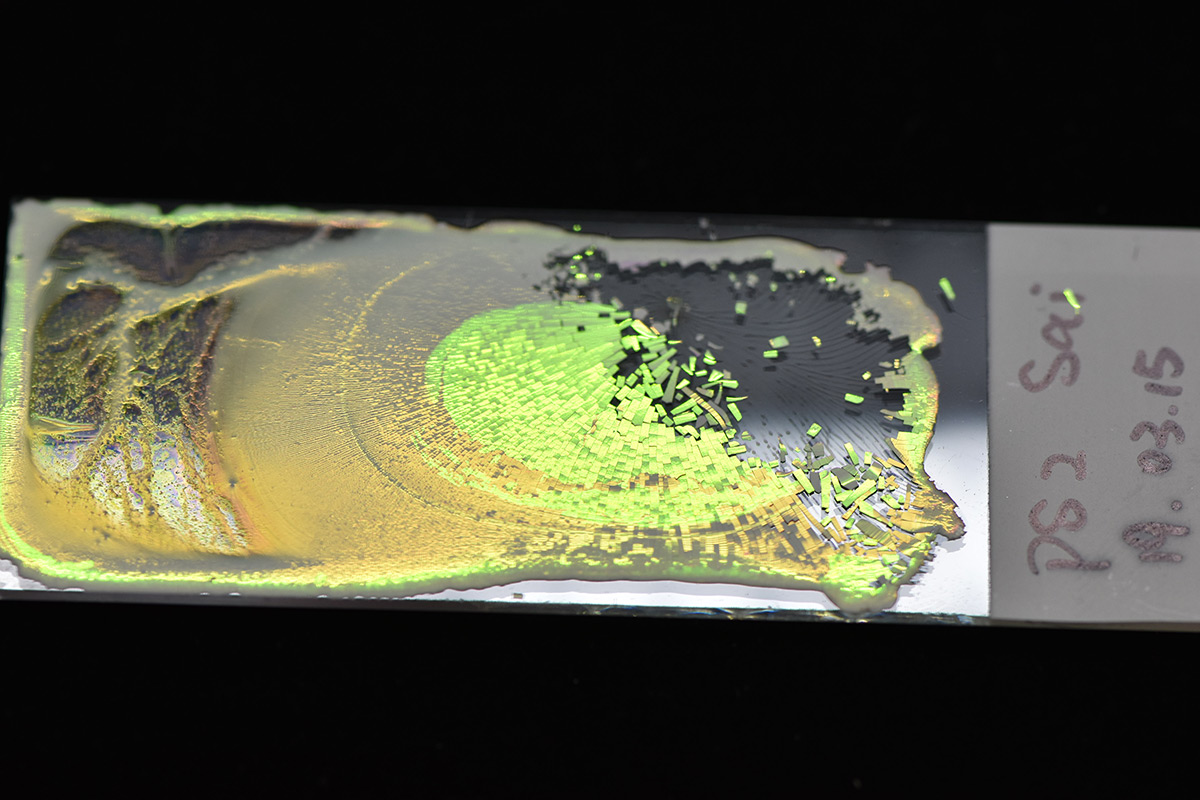
At our stand you can learn about structural colours and compare them with normal pigment colours. Change the colour of butterfly wings, examine beetles and our lab-made structural colours. But you will also learn where these colours are already being used and what potential they have. Finally, you get to put jelly bears under stress – let yourself be surprised!