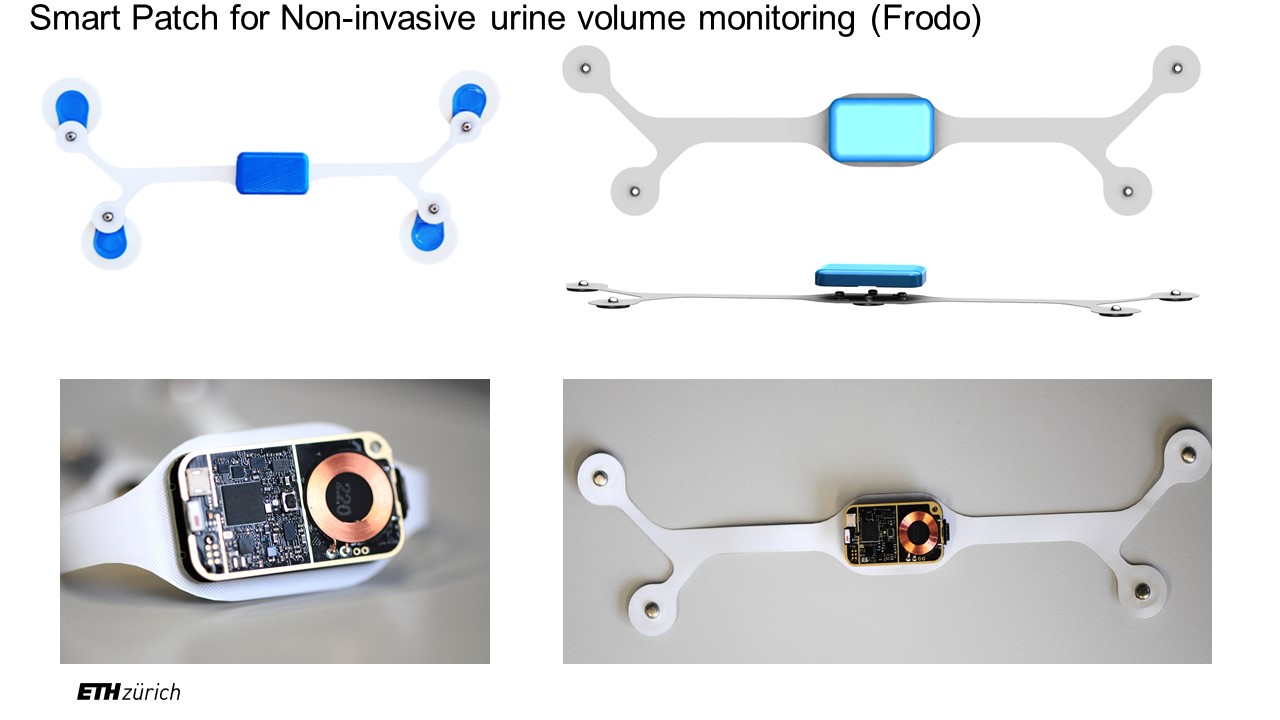
Monitoring urinary bladder volume with self-sustaining “smart patch”
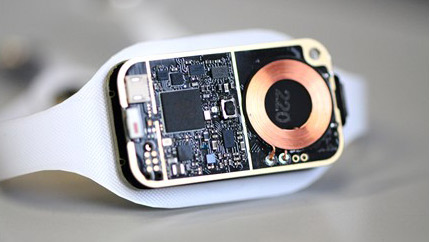
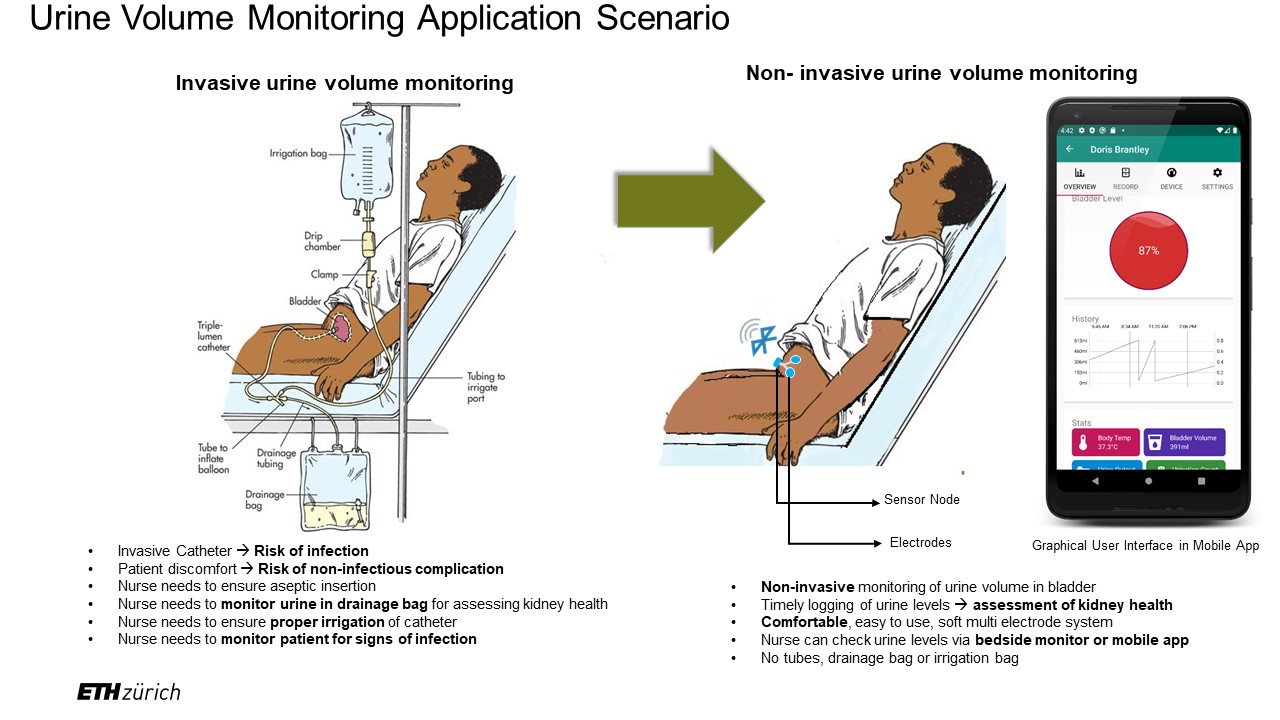
About one fifth of all hospital patients receive a catheter to monitor urinary bladder volume. Catheterisation is invasive, uncomfortable and is a major cause of infections in the hospitals. Frodo is a smart sensor wearable that can monitor the urine volume in the bladder non-invasively. With Frodo and other wearables healthcare will be made more accessible and manageable. Frodo 2.0 will include also precise indoor localization and will be battery free, scavenging energy from the environment.
Healthcare is undergoing a revolution with an increasing use of smart, wearable systems that can monitor health and track disease progression. This has been made possible primarily by advances in semiconductor technology, sensor technology and wireless communication. Wearables such as wristbands for monitoring body activities or clothing with integrated sensors have the potential to fundamentally change the healthcare system. At Scientifica, we will present “Frodo”, a solution for monitoring urinary bladder volume.
Around one fifth of all patients in a hospital receive a catheter to monitor urinary bladder volume. This increases the risk of urinary tract infections and other complications. We have developed a solution that provides real-time, continuous bladder monitoring that is non-invasive and painless to wear.
The Frodo smart patch uses four electrodes to measure the local bio-impedance, i.e. the conductivity of the lower abdomen that contains the urinary bladder. Urine output is a key indicator of the patient’s health and clinicians need to observe at least 30ml per hour of urine production in patients. Frodo monitors the urine volume and, thanks to embedded algorithms, can help monitor kidney function over time. It lasts almost one year with a single charge while recording urine volume electronically and notifies the nurse or the doctor on the urine output of the patient.
One of the challenges with wearable smart devices for monitoring health conditions is the power source, which must ensure long-term, uninterrupted use in both clinical and home settings. Currently, most wearables are powered by batteries, which make the devices relatively large and heavy. In addition, the batteries need to be changed or charged regularly, which leads to interruptions in use and loss of potentially important data.
The more often networked devices like Frodo are used, the greater the need for reliable energy sources and energy-saving sensors and algorithms. That is why we are also developing efficient sensor systems with intelligent energy management that enable effortless and continuous health monitoring. At Scientifica, for example, we will show you not only Frodo but also a range of wireless wearables self-sustaining devices and where they could be used for monitoring illness, and track them with precise indoor-outdoor localization.