Learning to grasp again thanks to exoskeleton
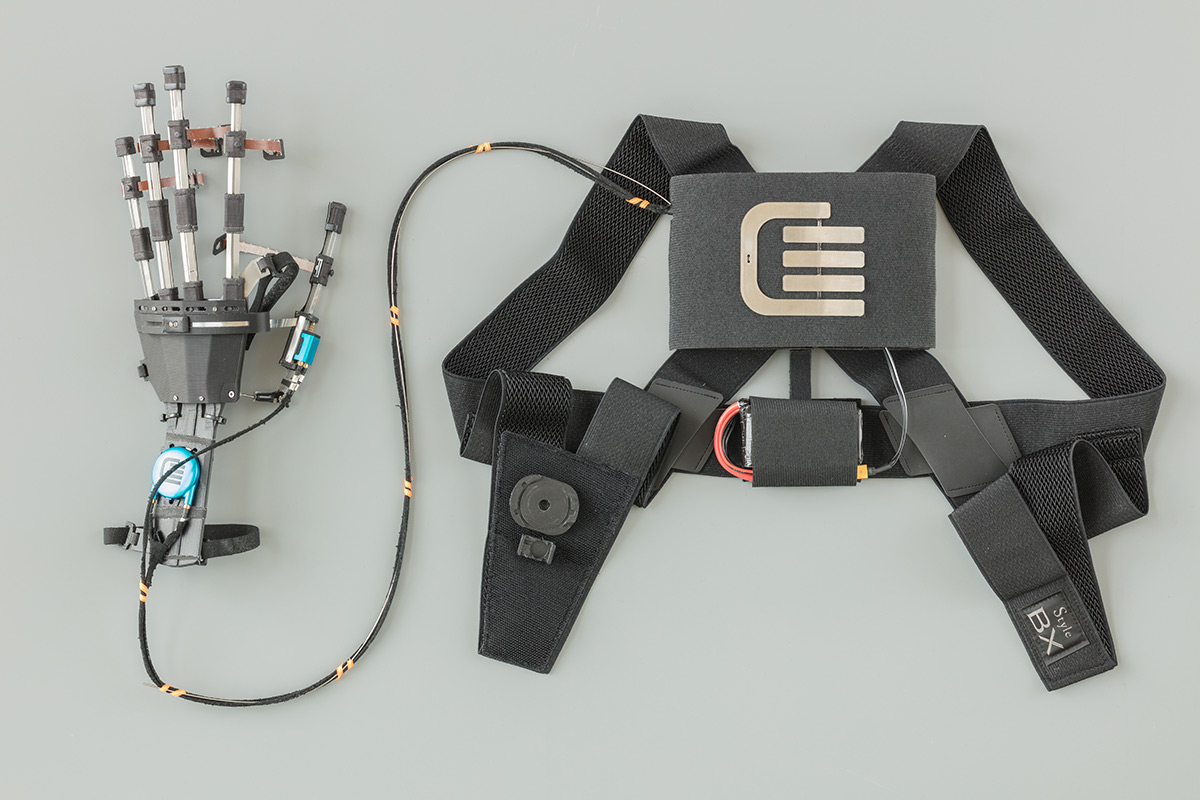
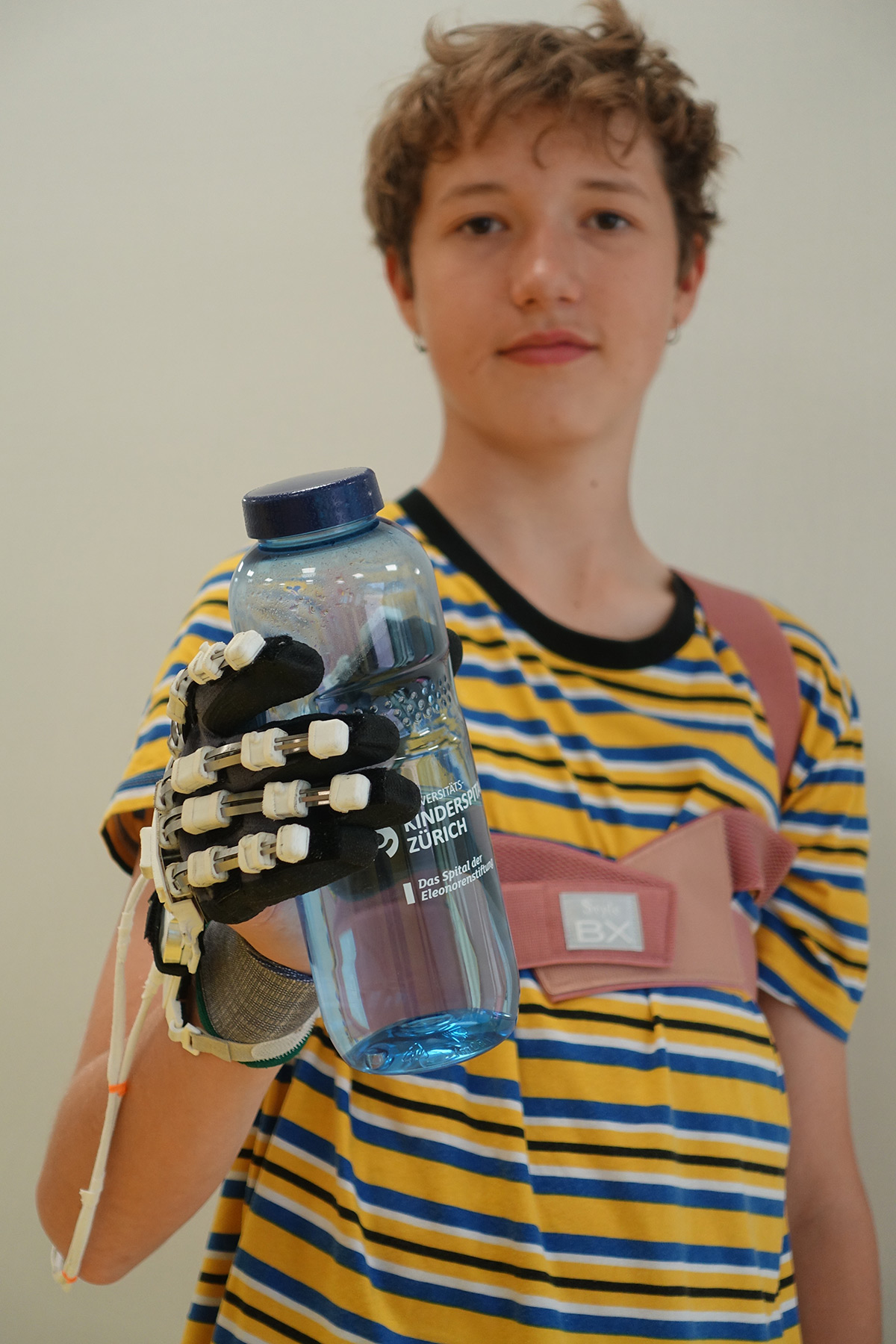
Robotic hand exoskeletons support adults and children with sensorimotor hand impairment to grasp and lift objects. This can enhance the therapy process after a stroke, spinal cord injury, or traumatic brain injury.
Opening a bottle, operating a cell phone, or closing a jacket – we need appropriate hand function for almost every activity in our daily life since the human hand allows us to interact with and shape our environment in unique ways. Losing these abilities due to a stroke, spinal cord injury, traumatic brain injury, or congenital brain injury can severely limit our everyday actions.
Robotic hand exoskeletons such as the RELab tenoexo (for adults) and the PEXO (for children) can support the therapy process as well as daily activities by artificially improving hand function, thereby restoring natural hand function. To mimic a natural grasping motion and ensure good wearing comfort, a biomimetic design approach was taken. The exo-finger’s slender spring mechanism with rigid intermediate elements mirrors the joints and bones of the human hand.
As a result, the exoskeleton reproduces natural grasping movements and automatically adapts to the human hand and the size and shape of an object. The hand exoskeleton can be tailored to individual needs, both for adults and children, and can thus provide valuable support for rehabilitation and everyday life to regain hand function and thus independence.